Finding the Best Dropshipping Software to Scale Your Business
The best dropshipping software is the command center for your entire online store. It's what connects your Shopify or WooCommerce site to your suppliers and, ultimately, to your customers, making sure everything runs smoothly behind the scenes. In today's e-commerce world, this kind of automation isn't just a nice-to-have; it's a must-have for anyone serious about growing their business.
What Is Dropshipping Software and Why It Is Non-Negotiable
Ever tried managing a busy restaurant using nothing but sticky notes? It might work when you only have a couple of tables. But once the dinner rush hits, it's pure chaos. Orders get lost, the kitchen runs out of key ingredients, and customers get angry. That's a perfect picture of what running a dropshipping business feels like without the right software.
Dropshipping software is your digital restaurant manager. It ditches the sticky notes for a smart, real-time system that keeps everything in check. You no longer have to manually type customer addresses into your supplier's website or constantly refresh a product page to see if it's still in stock. The software handles all of that for you, instantly and accurately.
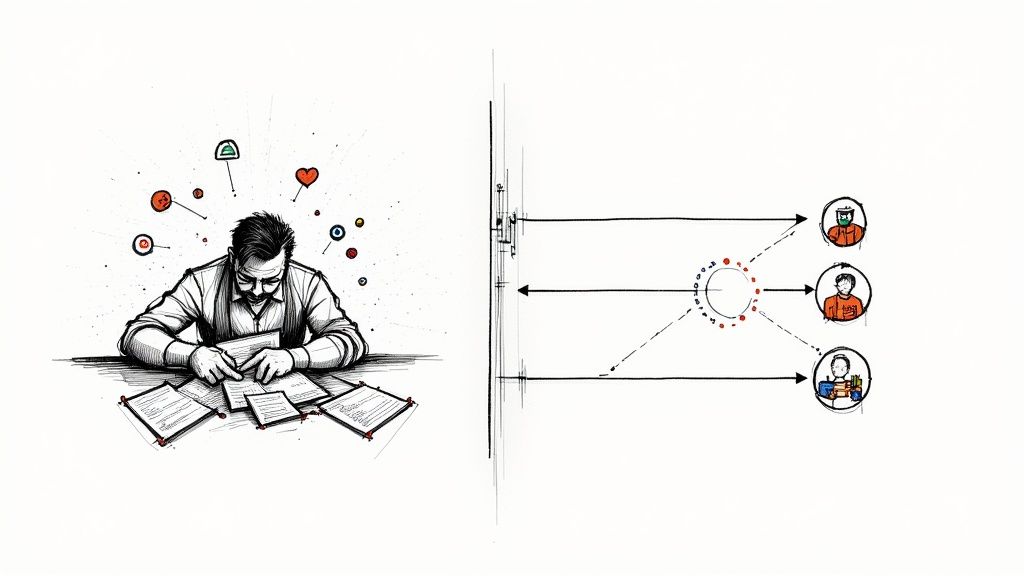
A Day in the Life Without Automation
Let's get real. Imagine waking up to 15 new orders. Without software, your morning is a total grind:
- Manual Order Entry: You'll have to open 15 different tabs for your supplier's website, carefully copying and pasting every single customer detail. One small typo and a package ends up in the wrong city.
- Inventory Checks: You log in and discover your best-selling product went out of stock sometime last night. Great. Now you have three orders you can't ship, which means unhappy customers and potential chargebacks.
- Price Updates: Your supplier quietly raised their price by $2. You didn't catch it, so you just sold five units at a loss, wiping out your profit for the day.
This isn't just slow and tedious; it's a recipe for disaster. This manual process is completely unscalable. What are you going to do when you start getting 50 or 100 orders a day? The whole system just breaks.
The Automated Workflow Advantage
Now, let's replay that same morning, but this time with a solid dropshipping tool integrated into your store. You wake up, glance at your dashboard, and see that all 15 orders were automatically sent to the right suppliers moments after they were placed. The software also saw that one item went out of stock and instantly hid it from your storefront, so you never oversold it.
The real power of dropshipping software is that it takes all the repetitive, soul-crushing tasks off your plate. This frees up your time—your most important asset—so you can focus on what actually grows the business: marketing, finding new products, and talking to your customers.
This kind of efficiency is non-negotiable in a market that's absolutely booming. The global dropshipping market was valued at USD 418.2 billion in 2025 and is projected to hit an eye-watering USD 3.31 trillion by 2035. That’s a staggering growth rate of 23% per year.
This explosive growth means more competition is jumping in every day. If you want to not just survive but thrive, operational efficiency is your secret weapon. You can read more about the projected growth of the dropshipping market to get the full picture. In an environment this competitive, trying to do everything by hand is like bringing a knife to a gunfight. Software isn't just a tool; it's the foundation of a modern, profitable e-commerce business.
The Core Features of Top Dropshipping Platforms
Picking the right dropshipping software is a bit like choosing a vehicle for a cross-country road trip. Sure, a basic car will get you there eventually, but a modern SUV kitted out with GPS, cruise control, and all the comforts makes the journey faster, safer, and a whole lot more enjoyable. In the same way, the best platforms do more than just connect your store to a supplier; they arm you with a suite of smart features designed to automate and optimize every step of your business journey.
These core features are the real engine of your e-commerce operation. They transform tedious, manual chores into slick, automated processes. This is absolutely critical in a market that's blowing up. The global dropshipping software market was valued at USD 1.31 billion in 2024 and is projected to hit USD 3.25 billion by 2032, which tells you just how much businesses are leaning on these powerful tools. You can learn more about these market projections to see where things are headed.
So, let's pop the hood and look at the essential features that separate the great platforms from the merely good ones.
Product and Supplier Sourcing
Before you sell a single thing, you have to find winning products from suppliers you can actually trust. The best dropshipping software doesn't just dump you into an endless digital catalog and wish you luck. It acts more like a professional scout, using real data to point you toward trending items with serious profit potential.
Great platforms will almost always include:
- Vetted Supplier Networks: This is a curated list of suppliers who’ve already been checked out for quality products, reliable fulfillment, and fair shipping times. It's a massive shortcut.
- Trend Analysis Tools: Think of a dashboard showing you what’s hot right now, backed by sales data and social media buzz.
- Profitability Calculators: Simple, built-in tools to quickly figure out your potential profit margin on an item after subtracting the product cost, shipping, and fees.
The real magic, though, is the integrated intelligence for sniffing out winners. If you want to go deeper on this, it's worth checking out the best product research tools for dropshipping. This kind of feature saves you from the guesswork that sinks so many new stores before they even get started.
Effortless Product Importing
Okay, so you've found a great product. Now what? The old way involved manually copying titles, writing descriptions from scratch, downloading and re-uploading images, and setting prices for every single variant. It's a one-way ticket to burnout.
Top-tier software completely eliminates this headache with one-click importing. You find a product you like, click a button, and bam—all the necessary info is pulled directly from the supplier and used to create a new product page in your store. We're talking high-res images, detailed descriptions, and all the variants like sizes and colors. What used to be a multi-hour chore becomes a 30-second task.
This isn't just about saving time; it's about maintaining momentum. The ability to quickly test new products is a massive competitive advantage, allowing you to adapt to market changes without getting bogged down in administrative work.
Automated Order Fulfillment
This right here is the heart of dropshipping automation. When a customer buys something from your site, the software acts as your virtual warehouse manager. It instantly and automatically sends all the order details—what they bought, where it's going—to the correct supplier for fulfillment.
There's no need to manually copy and paste addresses or order information. The whole thing is completely hands-off, meaning you can literally make sales while you sleep, travel, or focus on growing your brand. This single feature demolishes the biggest bottleneck to scaling a dropshipping business and all but eliminates the risk of human error.
Real-Time Inventory and Price Syncing
Selling a product your supplier just ran out of is one of the classic dropshipping nightmares. It leads to canceled orders, unhappy customers, and a black eye for your brand. The best platforms have a built-in safety net to prevent this: real-time synchronization.
The software is in constant communication with your supplier's inventory system. If a product's stock level hits zero or the supplier changes their price, your store gets updated automatically.
- Out of Stock? The product is immediately marked as "sold out" or even hidden from your store.
- Price Change? Your retail price adjusts automatically based on the markup rules you've already set.
This constant sync ensures your storefront is always an accurate reflection of what's actually available, protecting both your profits and your customer relationships without you having to lift a finger.
To put it all together, here's a quick checklist of the features we've covered and why they are non-negotiable for anyone serious about building a successful dropshipping store.
Essential Dropshipping Software Feature Checklist
| Feature | What It Does | Why It Matters (Problem Solved) |
|---|---|---|
| Product & Supplier Sourcing | Provides tools and vetted lists to find profitable products from reliable partners. | Solves the "what to sell" and "who to trust" problems, reducing risk and guesswork. |
| One-Click Product Importing | Instantly pulls all product data (images, descriptions, variants) into your store. | Eliminates hours of tedious manual data entry, letting you test products faster. |
| Automated Order Fulfillment | Automatically sends customer orders directly to the supplier for shipping. | Removes the biggest operational bottleneck, allowing for hands-free scaling. |
| Real-Time Inventory Sync | Constantly updates your store's stock levels to match the supplier's inventory. | Prevents you from selling out-of-stock items, protecting brand reputation. |
| Real-Time Price Sync | Automatically adjusts your retail prices when a supplier's costs change. | Protects your profit margins from unexpected supplier price hikes. |
Having these core functions working for you is what allows you to stop working in your business and start working on it. It’s the difference between being a busy order-taker and a strategic business owner.
How to Choose the Right Dropshipping Software
Picking your dropshipping software is a lot like choosing a business partner. This tool is going to be in the trenches with you, handling everything from finding products to getting them to your customers. A bad choice leads to constant headaches and lost sales, but the right one can completely streamline your path to profitability.
It's easy to get bogged down comparing feature lists. Instead, I find it's better to focus on four core areas that really determine if a platform will work for you in the real world. These are the pillars that separate the genuinely useful tools from the overhyped ones.
This flowchart gives you a simple way to think about it, showing how your primary need—whether it's sourcing products or automating fulfillment—points you toward the right kind of software.
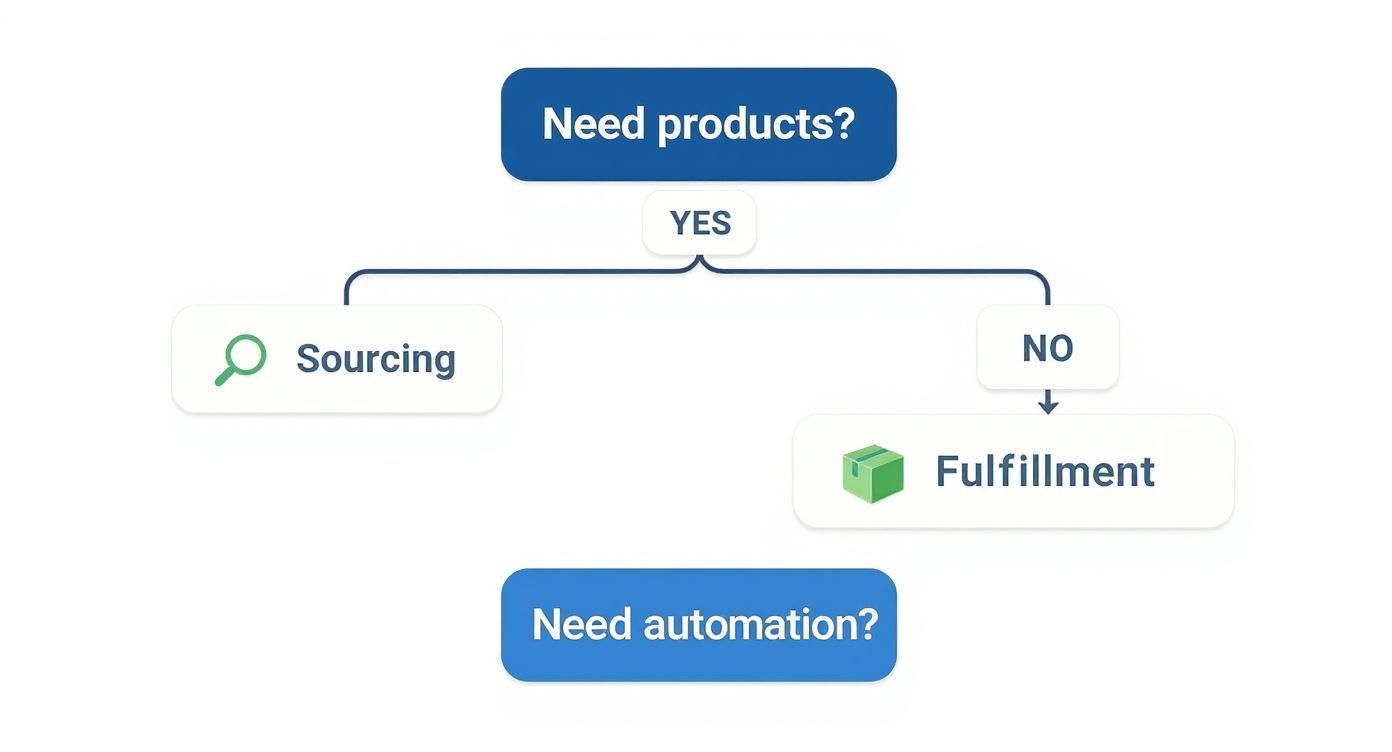
As you can see, the "best" tool really depends on the biggest problem you're trying to solve right now.
1. Evaluate Supplier Network Quality
Your products are only as reliable as the suppliers behind them. A platform boasting a huge, unvetted network is a minefield. You could be facing anything from shoddy products to shipments that never arrive. The very first thing you need to do is dig into the quality of the suppliers the software gives you access to.
Here’s what to look for:
- Vetted Suppliers: Does the platform actually screen its suppliers? You want to see that they've verified business legitimacy, product quality, and fulfillment history.
- Supplier Ratings and Reviews: Look for real, transparent feedback. Can you see performance scores and read what other sellers have said about them?
- Regional Warehouses: Having access to suppliers with warehouses in the US or EU is a game-changer. It can slash shipping times and keep your customers happy.
And don't just trust what the platform tells you. Before you commit, order a few test products from different suppliers to see the quality and shipping speeds for yourself.
2. Ensure Flawless Platform Integration
Your dropshipping software has to talk to your ecommerce store without any hiccups. A clunky integration means you'll be dealing with constant issues, like orders that don't sync or inventory counts that are always wrong. The connection needs to be seamless and automatic.
For example, if you're running on Shopify, your search should focus on finding the best Shopify app for dropshipping that feels like a natural extension of your store. The same goes for WooCommerce, BigCommerce, or any other platform. Use the free trial to import a few products and place a test order. Make sure the entire process just works.
A great integration works silently in the background, almost like magic. A bad one will make its presence known every single day with frustrating errors and manual fixes.
3. Understand the Real Pricing Model
Software pricing can be tricky. That low monthly fee might look great, but it can hide expensive transaction fees that slowly bleed your profits. On the flip side, a more expensive plan could include everything you need and actually save you money down the road. You have to understand the total cost.
Ask these questions to get the full picture:
- Subscription Tiers: What exactly do you get at each price point? Are core features like one-click order fulfillment locked behind a premium plan?
- Transaction Fees: Is the platform taking a cut of every sale on top of what you're already paying them each month?
- Hidden Costs: Are there extra fees for adding more stores, accessing certain suppliers, or going over an order limit?
I recommend plugging the numbers into a simple spreadsheet. Compare the true costs of your top choices based on your expected sales volume. This will quickly show you which option is genuinely the most cost-effective as you grow.
4. Confirm Potential for Scalability
The software that works for you at 10 orders a day must also be able to handle 1,000 orders a day. Scalability isn’t just a buzzword; it's about whether your tool can keep up with your success. If it can't, it becomes a bottleneck that forces you to switch platforms right when things are getting exciting.
Look for features like bulk order processing, customizable automation rules, and the ability to connect with other business software. Choosing a platform that can grow with you from the start is one of the smartest moves you can make.
Navigating Common Dropshipping Pitfalls
So, you've got the best dropshipping software running your store. That's a huge step, but the journey to success isn't just about tech. These tools are incredible for automating tasks, but they can't automate common sense or build customer relationships for you. One of the quickest ways to hit a wall is to forget the human element, which can turn a promising business into a real grind.
It's tempting to think you can just "set it and forget it," but that's one of the biggest myths in dropshipping. Your software might pull in product descriptions in a single click, but it can't add your brand’s personality or rewrite clunky, translated text from the supplier. Leaving that generic copy on your site is a dead giveaway to savvy shoppers and can absolutely tank your conversion rates.
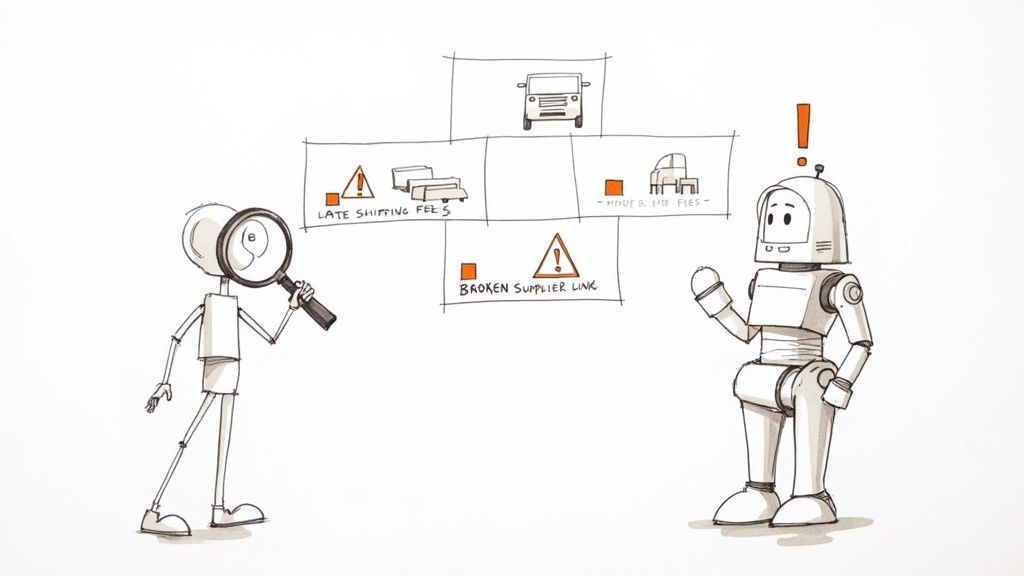
The Danger of Silent Suppliers
Another trap I see people fall into is treating their supplier relationship like a vending machine. You put an order in, they ship the product out. Simple, right? But what happens when that supplier suddenly changes materials and the product quality plummets? Or when their shipping times double overnight? If you aren't talking to them, you'll be the last one to find out—and the first one to deal with a flood of angry customer emails.
You have to build a real relationship with your key suppliers. A little proactive communication goes a long way and can give you a critical heads-up on things like:
- Upcoming Stock Issues: This gives you time to pause your ad campaigns before you oversell a product you can't get.
- Changes in Product Quality: You can source an alternative before your brand's reputation takes a hit.
- Holiday Shipping Delays: It allows you to be transparent and manage customer expectations from the start.
Your supplier isn't just a vendor; they are a direct extension of your business. How they perform directly impacts your customers' experience and, ultimately, your success. Ignoring them is like ignoring your own warehouse staff.
Uncovering Hidden Costs and Managing Expectations
The profit margins in dropshipping can be notoriously thin, and it's the unexpected costs that often eat them away. So many new entrepreneurs get blindsided by fees that weren't obvious at first, like currency conversion charges, payment processing fees, or even tiny transaction fees from a dropshipping app that really add up over hundreds of orders.
Failing to manage customer expectations around shipping is another classic rookie mistake. If your products are coming from overseas, a two-to-three-week delivery window is pretty standard. You absolutely have to be upfront about this. Trying to hide shipping times until after someone has already paid is a guaranteed recipe for chargebacks and terrible reviews.
Proactive Strategies for a Resilient Business:
- Be Transparent: Clearly state your realistic shipping estimates on product pages, at checkout, and in confirmation emails. Don't sugarcoat it.
- Audit Your Expenses: Make a habit of regularly reviewing your statements from your payment processor and software providers. Hunt for any hidden fees you missed.
- Establish a Returns Policy: Figure out a clear and fair return policy with your supplier. It builds trust and shows customers you're a legitimate business.
The dropshipping model is incredibly popular—more than 27% of all online stores use it to handle fulfillment. But that popularity also means the competition is fierce. Despite the industry's growth, it's estimated that only about 10% of new dropshippers are actually successful in their first year. This just goes to show how critical it is to avoid these common mistakes with a smart, realistic strategy. You can discover more dropshipping statistics and trends to get a clearer picture of the landscape.
Why an All-in-One Platform Beats a Patchwork of Single Tools
When you first get into dropshipping, it’s easy to fall into the trap of collecting individual tools for each task. You find a great app for product research, another for handling orders, and maybe a separate one for making ad creatives. While this à la carte approach seems flexible at first, it almost always ends up creating a tangled, inefficient mess.
Think of it like building a car. You could buy an engine from one company, a transmission from another, and an electrical system from a third. But getting all those parts to communicate and work together smoothly? That's a nightmare. An integrated platform, on the other hand, is like buying a car straight from the factory—every single component was designed from the ground up to work in perfect harmony.
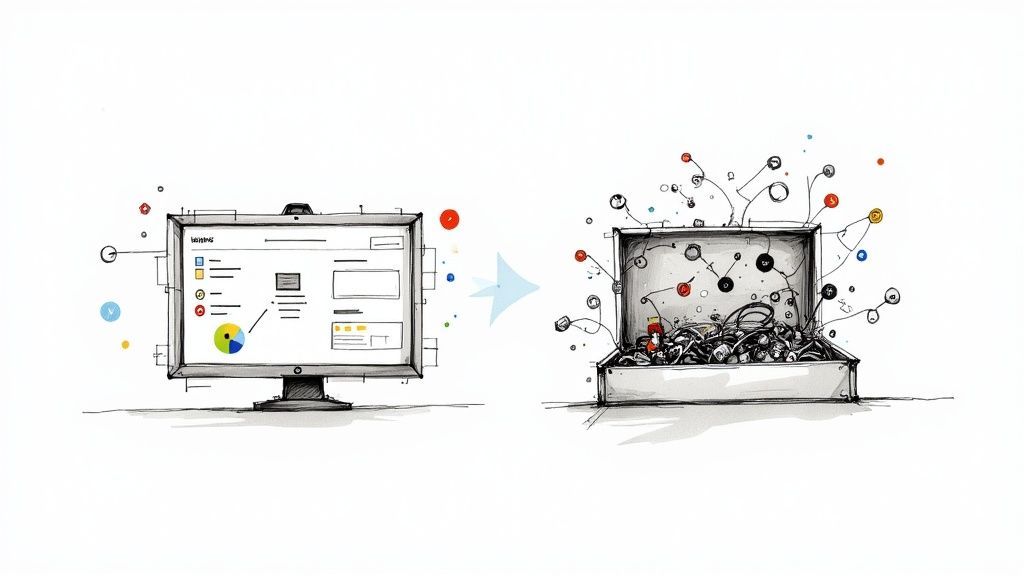
This isn't just about making your life easier. Choosing an integrated system gives you real, tangible advantages that can make or break your business.
Unlocking Significant Cost Savings
Let's talk about the most obvious win: the money you'll save. Subscribing to a bunch of different specialized tools gets expensive, fast. A good product research tool can run you $50/month, an order automation app might be another $50, and a tool for spying on competitor ads could easily be $100 or more. Suddenly, you're looking at a software bill that climbs into the hundreds each month.
Bundled platforms or subscription services like EcomEfficiency roll all of that functionality into a single, much more manageable monthly payment. Instead of tracking five or six different bills, you have one predictable cost. This is a game-changer, especially when you're just starting out and need to keep your overhead low.
Achieving Flawless Integration
When all your tools are built to speak the same language, you sidestep the technical headaches that come with a pieced-together setup. You don't have to worry about broken API connections, data getting lost between apps, or an update to one tool crashing another. Everything just works.
This seamless flow makes your day-to-day operations incredibly smooth and reliable.
- Data Flows Effortlessly: The winning product you find with your research tool can be instantly pushed to your store, and its data can be used to generate ad copy and creatives—all inside the same ecosystem.
- Fewer Costly Errors: Systems designed to work together are far less likely to have the sync errors that lead to overselling a product or sending the wrong details to a supplier.
- More Time for What Matters: You spend less time troubleshooting tech issues and more time actually growing your business. That alone is a massive competitive advantage.
An integrated system creates a single source of truth for your entire business. This clarity eliminates the confusion and costly mistakes that happen when you're trying to make sense of data from a half-dozen different dashboards.
Gaining a Centralized Command Center
Trying to run a business by hopping between a dozen different browser tabs is a recipe for disaster. It's distracting, inefficient, and you're bound to miss something important. This is where the best dropshipping software truly shines—by giving you a unified dashboard that acts as a command center for your entire operation.
From one screen, you can watch your sales come in, keep an eye on inventory levels, research your next big product, and see how your ads are performing. This 30,000-foot view lets you spot trends, catch problems early, and make smarter decisions based on the whole picture, not just isolated bits of information.
Plus, when something does go wrong, you have one support team to contact. No more playing detective, trying to figure out which of your five software vendors is causing the problem. That unified support saves a ton of time and frustration, letting you get back to business.
What's Next on Your Path to an Automated Dropshipping Business?
So, where do you go from here? We’ve covered a lot, from essential features to the nitty-gritty of choosing the right software. The biggest takeaway should be this: there's no single "best" dropshipping software for everyone.
The perfect tool for a clothing boutique might be a terrible fit for someone selling electronics. It all comes down to finding the platform that clicks with your niche, your budget, and where you want to take your business.
Make a Shortlist and Get Your Hands Dirty
It’s easy to get stuck in "analysis paralysis," endlessly comparing features on paper. The most valuable thing you can do right now is to move from reading to doing. Pick two or three platforms that seem like strong contenders and jump into their free trials.
- Bring Your Checklist: Use the evaluation questions and feature lists we went over earlier. They'll give your testing some much-needed structure.
- Run a Fire Drill: Don't just poke around. Actually import a few products. Try placing a test order. See what happens.
- Check the Vibe: Is the dashboard easy to navigate? Does it feel intuitive, or are you constantly hunting for the right button? You'll be spending a lot of time here, so it needs to feel right.
Think of it like this: the software is the engine, but you're still the one in the driver's seat. A powerful engine is useless if you can't figure out how to steer. Your success depends on building a smart business strategy around the tool you choose.
Making a careful, well-researched decision now is one of the most important things you can do for the future of your store. The right software doesn't just do the grunt work for you; it frees you up to focus on the things that actually grow your business—marketing, branding, and making your customers happy.
Frequently Asked Questions About Dropshipping Software
Even with a solid plan, jumping into the world of dropshipping software can leave you with some nagging questions. Let's clear up a few of the most common ones so you can feel confident picking the right tools and getting your store off to a strong start.
What’s a Realistic Monthly Budget for Good Dropshipping Software?
The price tag on dropshipping software can swing pretty wildly, but most tools fall into a few predictable buckets. It's a bit like a gym membership—you can get a basic pass, upgrade for special classes, or go all-in with a personal trainer.
- Beginner Plans ($20-$50/month): Perfect when you're just getting your feet wet. These usually give you the essentials, like one-click product importing and automated order fulfillment, but might limit how many products you can list.
- Intermediate Plans ($50-$100/month): Once you start to see some traction, you'll need more horsepower. These plans typically raise your product limits and add handy features like better analytics or bulk order processing.
- Advanced/Enterprise Plans ($100+/month): For the serious players. If you're managing a high-volume store, these plans offer unlimited products, priority support, and the rock-solid infrastructure needed to process thousands of orders a day without breaking a sweat.
Can I Mix and Match Different Dropshipping Apps?
Technically, yes, but tread very carefully. It's pretty common to use a specialized product research tool alongside your main fulfillment app. The real trouble starts when you try to use multiple fulfillment apps for the same store. That's a recipe for disaster.
The biggest danger here is syncing conflicts. Picture two different apps trying to update the inventory level for the exact same product. One says you have 10 left, the other says 8. This inevitably leads to overselling, angry customers, and a massive operational headache. For fulfillment, stick to one source of truth.
The smartest move is to find one powerful, all-in-one platform that handles the majority of your needs. This sidesteps the technical glitches and hidden costs that come from duct-taping multiple apps together.
How Long Does It Actually Take to Set Up Dropshipping Software?
This really comes down to the tool’s complexity and how prepared you are. Honestly, for most people, it’s surprisingly quick. A basic setup—just connecting the software to your Shopify or WooCommerce store and pulling in a few products—can often be done in just a couple of hours.
Now, if you want to get fancy with custom settings, like creating complicated pricing rules or mapping product variants from different suppliers, you'll want to set aside more time. That could take a day or two to get everything dialed in just right. The trick is to start simple and expand your setup as you grow.
Do I Really Need Software If I'm Just Starting Out?
Yes, absolutely. It's tempting to try and save a few bucks by managing everything in a spreadsheet at first, but this is a classic trap. Investing in the right software from day one is one of the best decisions you can make for your business.
Think of it less as an expense and more as building a proper foundation. By automating things like order fulfillment and inventory updates from the get-go, you're building a business that can actually scale. It helps you avoid the amateur mistakes and bad customer experiences that can kill a new store before it even gets a chance to take off. Choosing the best dropshipping software early on isn't a luxury; it's a strategic move for long-term success.
Instead of juggling dozens of expensive, single-purpose tools, you can get everything you need in one place. EcomEfficiency bundles over 50 premium e-commerce tools for product research, SEO, and ad creation into one simple, low-cost subscription. Cut your software bill by up to 99% and start building your business more efficiently today. Learn more about EcomEfficiency.