Native Ads vs Display Ads A Strategic Guide
Choosing between native and display ads really comes down to what you're trying to achieve with your campaign. If you need to cast a wide net and get your brand name out there quickly, display ads are a solid choice. But if your goal is to pull users in, build some trust, and get them genuinely interested, native ads are where you'll see the real magic happen.
Understanding the Digital Advertising Approach
Picking the right ad format is one of the first, and most important, decisions you'll make for any digital campaign. While both native and display ads want to grab a user's attention, they go about it in completely different ways. Display ads are designed to be noticed—think classic banners and pop-ups that deliver a message loud and clear. Native ads, on the other hand, play it cool, blending in with the surrounding content to feel like part of the natural user experience.
This difference has a huge impact on how people respond. The industry is clearly leaning into less disruptive ads, with marketers in the U.S. spending over $97 billion on native ads in 2023 alone. The data backs this up: native ads are 53% more likely to be viewed than old-school banners and tend to get click-through rates that are nearly nine times higher. You can dig into more insights about native ad performance to see just how they stack up.
This is what we mean when we talk about native ads. You can see how formats like in-feed units and content recommendations are designed to look and feel like they belong on the page.
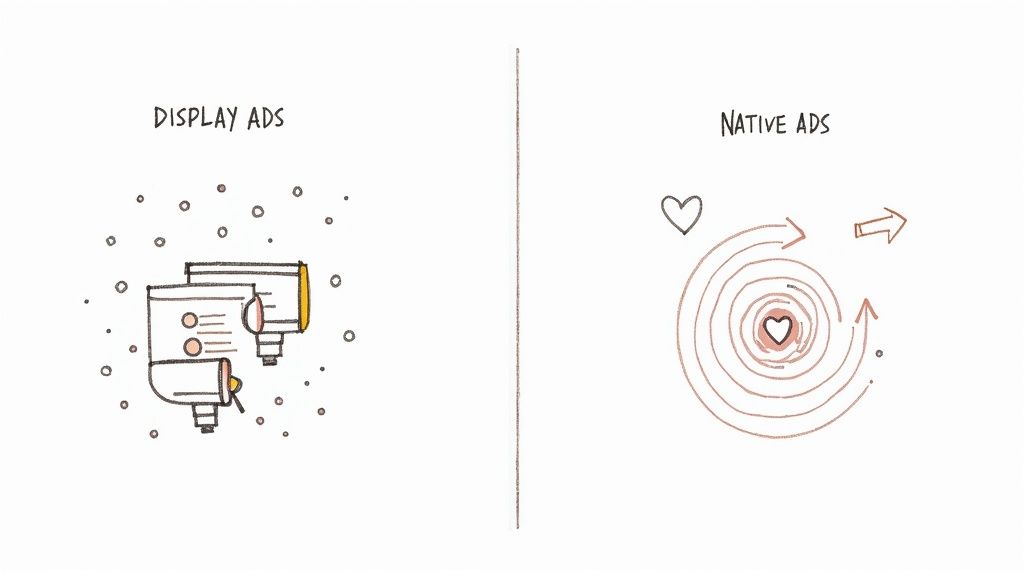
The real power of native advertising is that it doesn't scream "I'm an ad," which is precisely why it drives such high engagement.
Native vs. Display Ads: A Quick Comparison
To cut through the noise, here's a simple table that lays out the core differences at a glance.
| Attribute | Native Ads | Display Ads |
|---|---|---|
| User Experience | Blends in naturally with the page's content | Clearly stands out from the content |
| Primary Goal | Engagement, trust, and consideration | Awareness, reach, and direct response |
| Ad Format | In-feed, sponsored articles, recommendations | Banners, pop-ups, skyscrapers |
| Performance Focus | Higher CTR, longer time on page | High impressions, broad audience reach |
This table gives you a high-level view, but the best choice always depends on your specific campaign goals and the audience you're trying to connect with.
The Strategic Role of Display Advertising
When we talk about native ads vs. display ads, it's easy to focus on native's subtlety. But let's be clear: display advertising still holds a vital and powerful spot in any serious marketer's playbook. Its real strength is in its unapologetic visibility and immediate scale.
Think of display ads as the digital equivalent of a highway billboard—they're built to be seen, not to blend into the scenery.
Driving Awareness and Retargeting
This makes display advertising an absolute workhorse for top-of-funnel goals. If your e-commerce brand is dropping a new product line or kicking off a huge seasonal sale, you need to tell as many people as possible, right now. Display ads, spread across vast networks of websites, can deliver that kind of reach almost instantly, planting the seeds of awareness in a massive audience.
The very first banner ad, launched by AT&T way back in 1994, snagged an incredible 44% click-through rate. Of course, times have changed, but with programmatic display ad spending expected to reach $116.76 billion in 2025, its value is undeniable. You can dive deeper into the evolution of display advertising on StackAdapt.
A huge part of its lasting power comes from retargeting. Display ads are the go-to for bringing back shoppers who visited your site and left, especially those who abandoned their carts. Serving up a visual reminder of that exact product they were considering is a proven way to pull them right back into the funnel and close the sale.
Key Takeaway: Display ads shine when you need maximum exposure and a direct response. Their power isn't in quiet persuasion but in bold, scalable communication, making them essential for brand launches and high-impact retargeting.
Yes, "banner blindness"—where users just tune out ad placements—is a real challenge. But a sharp, well-designed display ad with a can't-miss offer is still a potent tool for driving both awareness and action. When you need to make a loud statement and get in front of a huge audience fast, display ads are an indispensable part of your toolkit.
How Native Advertising Builds Deeper Engagement
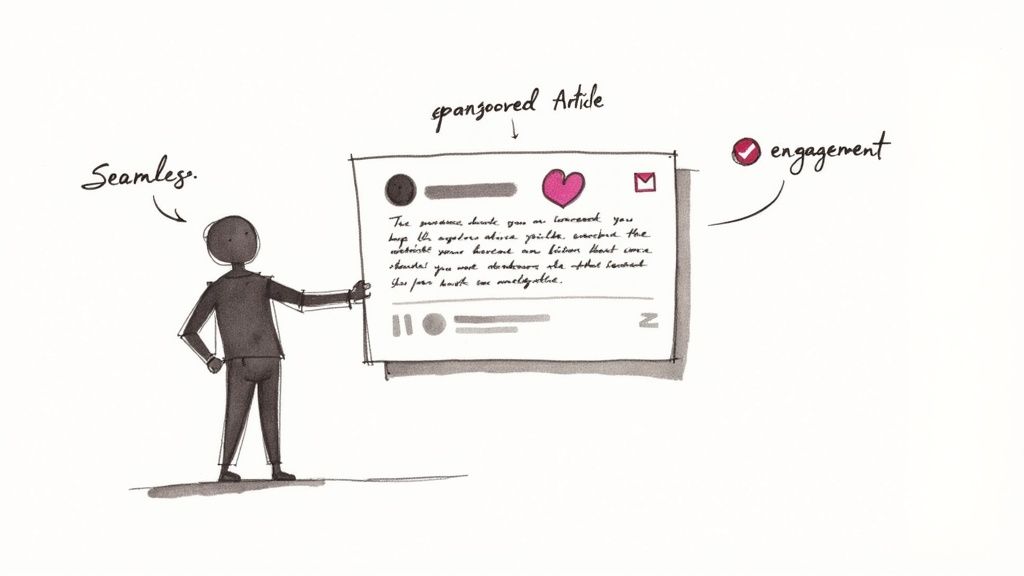
Display ads work by interrupting the user. Native ads win by blending in. Their entire strength is in matching the form and function of the platform they live on, creating a seamless experience that consumers, who are tired of being sold to, actually welcome.
Instead of just demanding attention, native ads aim to provide value first. They inform, entertain, or solve a problem rather than just pushing a product. It's this fundamental difference that helps them overcome the "banner blindness" that makes so many display campaigns invisible.
The Psychology of Seamless Integration
The real magic of native advertising is its subtlety. When an ad shows up as a natural part of someone's content feed, it sidesteps their built-in ad-blocking defenses. This integration sparks genuine curiosity instead of an immediate, defensive click-away.
Think about how this plays out in common formats:
- In-Feed Ads: These are the sponsored posts you see on Facebook or X (formerly Twitter). They mimic organic posts so well they feel like a relevant update, not a hard sell.
- Sponsored Articles: A brand pays for an article on a major publication. It offers genuinely helpful information, which positions the brand as a credible expert, not just another vendor.
- Content Recommendation Widgets: Those "You Might Also Like" boxes at the bottom of an article are prime real estate. They mix sponsored content with the publisher's own articles, catching users right when they're looking for what to read next.
When you deliver valuable content in a format people already know and trust, you're building a relationship. It's why native ads lead to a reported 18% increase in purchase intent over traditional ads—consumers are just more open to listening.
Fostering Genuine Interest and Trust
This value-first approach is the heart of the native ads vs. display ads conversation. A display ad is fighting for a quick, impulsive click. A native ad is designed to start a conversation. The engagement you get is almost always higher quality because the people who click are genuinely interested in what you have to say.
That deeper connection builds real brand affinity. Someone who spends five minutes reading your sponsored article or watching your in-feed video is forming a much stronger bond with your brand than someone who accidentally clicks a banner. This trust is what moves potential customers from just being aware of you to actually wanting to buy from you, making native ads a true mid-funnel powerhouse.
Analyzing Key Performance And Cost Metrics
When you're deciding where to put your ad dollars, the numbers tell a fascinating story. Both native and display ads have their place, but they perform very differently. You really need to dig into the metrics—Click-Through Rate (CTR), Cost Per Mille (CPM), and conversion quality—to see which one aligns with your campaign goals.
Display ads are all about blanketing the internet with your brand. They’re built for mass visibility, generating a ton of impressions fast, which usually keeps the CPM relatively low. The trade-off? Banner blindness is a real thing. People have trained themselves to ignore these ads, so the average CTR for display ads often hovers at a pretty low number.
Native ads, on the other hand, are designed to pull people in. Because they look and feel like part of the surrounding content, they neatly sidestep that ad fatigue. This built-in relevance is why they consistently achieve a much higher CTR—they capture genuine interest, not just fleeting glances.
Deeper Look At Cost And Engagement
It's easy to look at the lower CPMs for display ads and think you're getting a better deal. But for campaigns focused on generating high-quality leads or actual sales, native ads often deliver a much stronger return on ad spend (ROAS). The price difference really comes down to the quality of engagement you're buying.
Let's break down the costs. Here's a quick look at how the performance and cost metrics typically stack up for each format.
Comparing Performance and Cost Metrics
| Metric | Native Ads | Display Ads | Key Considerations |
|---|---|---|---|
| CTR | 0.5% - 1.5%+ | 0.05% - 0.2% | Native ads' higher engagement comes from blending in with content, bypassing "banner blindness." |
| CPM | $10 - $100 | $2 - $20 (Banners), $20 - $50 (Video) | You pay a premium for native placements because they're less disruptive and more integrated. |
| CPA | Generally Lower | Generally Higher | Higher-quality clicks from native ads often lead to better conversion rates and a more efficient CPA. |
| ROAS | Stronger for conversion-focused goals | Stronger for brand awareness/reach goals | Native drives more qualified traffic, while display is built for broad-scale impression volume. |
The data in the table makes the value proposition pretty clear. While display ads might look cheaper on a per-impression basis, their lower engagement can inflate your cost per acquisition.
The trade-off is clear: native ads generate up to 60% more engagement than their display counterparts. This superior interaction is a direct result of their seamless integration, which reduces the friction often associated with traditional advertising.
This high engagement usually means you get a more efficient Cost Per Acquisition (CPA). Think about it: a user who clicks on a native ad is already interested in the topic and more likely to follow through. For an e-commerce brand, this means the traffic you get from native advertising is often primed to buy, leading to more sales and loyal customers down the line.
So, while display is great for getting your name out there, native is the workhorse for driving meaningful action. You can get more details on how these advertising costs break down to help with your budget planning.
When To Use Native Ads vs. Display Ads
Deciding between native and display ads isn't about picking a "winner." It’s about matching the right tool to the right marketing goal. Where you are in the sales funnel and what you want a customer to do next will point you to the best choice.
Think of it like this: display ads are your megaphone, shouting a message from the rooftops. Native ads are a quiet, engaging conversation starter.
When Display Ads Are the Right Choice
Display ads are all about getting eyeballs and driving immediate action. Their visual, in-your-face nature is perfect for campaigns that need to make a splash quickly.
You should lean on display ads when your main goal is:
- Launching a New Product: Need to build mass awareness from scratch, and fast? The sheer reach of a display campaign is hard to beat for introducing a new product to the world.
- Driving Urgent Sales: For flash sales, holiday promotions, or any limited-time offer, display ads create the urgency needed to get people clicking and buying right now.
- Aggressive Retargeting: Display is still the king of bringing back lost sales. A bold, visual ad showing the exact product someone left in their cart is one of the most effective ways to close the deal.
This infographic gives a great at-a-glance look at how the performance metrics stack up for each format.
As the chart shows, display ads often give you a lower cost per impression (CPM), making them cost-effective for broad visibility. But native ads clearly pull ahead with much higher click-through rates and overall engagement.
When to Lean on Native Ads
Native advertising is your go-to when the goal is more subtle. It's about building a relationship, educating an audience, and gently guiding them through their buying journey.
Choose native ads for campaigns built around:
- Promoting In-Depth Content: If you’ve invested in a fantastic blog post, a detailed guide, or a compelling case study, native ads are the best way to get it in front of people who are actively looking for that information.
- Building Brand Credibility: By showing up with helpful content instead of a hard sell, you position your brand as a trusted authority. That kind of trust is gold for building long-term customer loyalty.
- Nurturing Mid-Funnel Leads: Native is perfect for staying on the radar of potential customers who know who you are but aren't quite ready to buy. It keeps your brand top-of-mind without feeling pushy.
Frequently Asked Questions
When you're trying to figure out where your ad budget should go, a few common questions always pop up. Let's break down the answers to help you build a smarter ad strategy for your e-commerce brand.
Which Ad Type Is Better For Mobile Advertising?
Both can work on mobile, but native ads almost always feel better to the user. They blend right into the content you're already scrolling through on apps, news feeds, and articles, making them far less jarring than a classic banner ad.
On a small screen, a clunky banner or a pop-up can completely derail the user's experience and just lead to annoyance. If keeping that experience smooth and positive on mobile is a top priority, native advertising is definitely the way to go.
Expert Insight: The smartest approach is often a blended one. Think of it this way: use display ads for big, top-of-funnel brand awareness and for those hard-hitting retargeting campaigns where you need to create urgency. At the same time, use native ads to draw potential customers in with genuinely useful content, building trust as they consider a purchase.
Can I Use Native And Display Ads Together?
Absolutely. In fact, you probably should. A truly effective media plan uses the unique strengths of both formats to cover all the bases.
Imagine your e-commerce store is launching a new product line. You could kick things off with a broad display campaign to get the word out to as many people as possible, fast. While that's running, you could launch a native ad campaign promoting a helpful guide like "5 Ways to Style Our New Collection," aimed at people who've already shown some interest. This tag-team approach guides customers from their first look all the way to a confident purchase.
How Is ROI Measured Differently For Native Ads?
You'll still track the basics like CTR and conversions for both, but measuring the true return on a native ad campaign means looking at what happens after the click. The goal isn't just to get a click; it's to see if the user genuinely engaged with your content.
For native campaigns, you'll want to watch these key performance indicators:
- Time Spent on Content: Did people actually stick around to read your sponsored article?
- Scroll Depth: How far down the page did they get? Did they consume the whole thing?
- Social Shares: Was your content good enough for them to share with their own network?
- Brand Lift: Did running the campaign lead to a noticeable improvement in how people see your brand or their intent to buy from you?
These metrics paint a much richer picture of the value you're creating, well beyond that initial conversion.
Ready to slash your software costs and streamline your marketing toolkit? With EcomEfficiency, you get access to 50+ premium AI, SEO, and ad-spy tools in one simple subscription. Stop juggling multiple bills and start discovering winning strategies with tools like Semrush, Pipiads, and Midjourney for just $19.99/month. Explore all the tools and start your trial today!